 Maintainly
Safety
How often should you replace your smoke detector unit (10-year)?
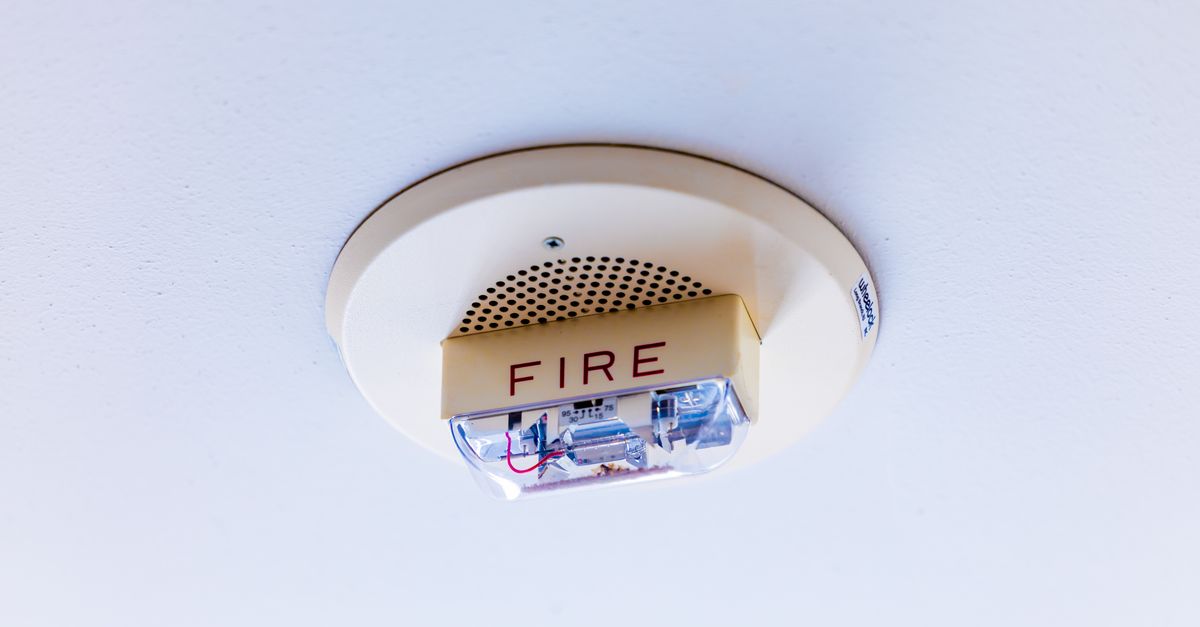
Replace smoke detector unit (10-year) every 10 years. The commonly recommended range is replace at 10 years. Sensors degrade; a 10-year-old alarm may not detect smoke reliably. This is a safety-critical task, so do not let it slip.
Smoke alarms expire. The sensing element degrades whether the alarm has ever seen smoke or not, and after about ten years its response is no longer reliable. This is not a marketing interval: it is printed on the back of the unit by the manufacturer.
Why does replacing your smoke detector unit (10-year) matter?
Sensors degrade; a 10-year-old alarm may not detect smoke reliably.
What happens if you skip replacing your smoke detector unit (10-year)?
An expired alarm can still chirp, still pass a button test, and still fail to detect an actual fire. The test button confirms the battery and the sounder work. It does not test the sensor.
How do you do it?
- Read the manufacture date on every unit. Twist the alarm off its base and look at the back. Replace at ten years from that date, not from when you moved in.
- Choose the right sensor type. Photoelectric responds faster to smouldering fires, which are the ones that kill people at night. Many authorities now recommend photoelectric or dual-sensor throughout.
- Match the mounting and wiring. If the existing alarm is hard-wired, buy a replacement with a compatible base and connector, or fit a new base.
- Replace all of them together. They were almost certainly installed on the same day, so they expire on the same day.
- Test the interlink. Trigger one alarm and confirm every other alarm in the house responds.
- Write the install date on the new units. Marker on the side. Ten years is long enough that you will not remember.
What does it take?
How do you know replacing your smoke detector unit (10-year) is overdue?
- A manufacture date more than ten years old
- Yellowing of the plastic case, which is a rough age indicator
- Repeated false alarms, which often signal a degraded sensing chamber
- No date at all on the unit, which means it is old enough to replace on principle
What do people get wrong?
- Dating replacement from purchase rather than from the printed manufacture date
- Replacing only the alarm that failed, leaving its identically aged siblings in place
- Fitting ionisation alarms near kitchens, where they nuisance-trip and get disabled
- Mixing brands on an interlinked system, which often will not communicate
What changes how often you need to do it?
- Combination smoke and CO units usually expire sooner, commonly at seven to ten years
- Kitchens and bathrooms need heat alarms rather than smoke alarms
- Radio-interlinked alarms simplify retrofit where running cable is impractical
When should you stop and call someone?
Hard-wired and interlinked systems in newer homes should be replaced by an electrician if you are not comfortable working at the ceiling rose. Battery and radio-interlinked units are a homeowner job.
Want this scheduled for you instead of remembered?
Get the free appDoes this differ in the US, UK, Australia or Canada?
United States
NFPA guidance is replacement at ten years. Sealed ten-year lithium units are now mandated for replacements in several states, which conveniently makes the expiry date and the battery life the same date.
United Kingdom
Ten years is the standard replacement interval and BS 5839-6 is the relevant standard for domestic premises. Scotland’s interlinked alarm requirement means replacements generally need to be part of a compatible interlinked set rather than standalone units.
Australia
AS 3786 is the standard alarms must comply with, and ten years is the replacement point. Queensland legislation specifically requires photoelectric alarms that comply with AS 3786:2014, interconnected so they all sound together, which for most homes means replacing the whole set at once rather than one at a time.
Canada
Ten years is the standard, and provincial fire codes generally make replacement at the manufacturer’s stated expiry mandatory rather than advisory. Ontario’s fire code obliges the homeowner, and for rentals the landlord, to maintain them.
Common questions
Why does replacing your smoke detector unit (10-year) matter?
Sensors degrade; a 10-year-old alarm may not detect smoke reliably.
What happens if you skip replacing your smoke detector unit (10-year)?
Sensors degrade; a 10-year-old alarm may not detect smoke reliably. Skipping it does not usually fail immediately, which is exactly why it gets forgotten: the consequence arrives months later as a repair bill rather than as an obvious fault.
Does replacing your smoke detector unit (10-year) differ by country?
Universal, NFPA (US), BS 5839 (UK), CAN/ULC (CA) all advise replacing alarms at 10 years. AU: alarms must comply with AS 3786 and QLD requires interconnected photoelectric alarms in every bedroom, so the set is usually replaced together.
More Safety guides
Often done at the same time
Browse by area of the home
Stop tracking this by hand
Maintainly keeps this task and 65 others on schedule, tuned to your home's systems, climate and country, and reminds you before each is due.
Add just this one reminder and skip the setup.