 Maintainly
Safety
How often should you replace your smoke detector batteries?
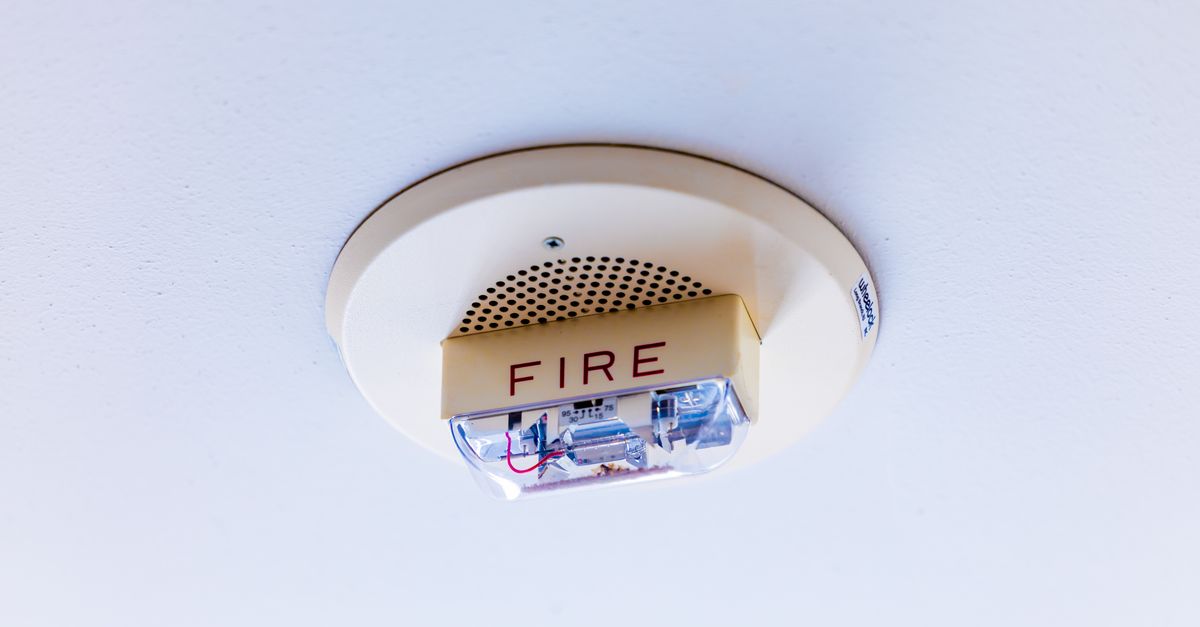
Replace smoke detector batteries once a year. The commonly recommended range is every 12 months (test monthly). Dead batteries are the #1 reason smoke alarms fail in a fire. This is a safety-critical task, so do not let it slip. It is seasonal work, best done in autumn / fall.
A smoke alarm with a dead battery is a plastic disc on the ceiling. Fire services consistently report that a large share of fatal house fires happen in homes where an alarm was present but not working, and a missing or flat battery is the usual reason.
Why does replacing your smoke detector batteries matter?
Dead batteries are the #1 reason smoke alarms fail in a fire.
What happens if you skip replacing your smoke detector batteries?
You lose the warning entirely. A smouldering fire produces a great deal of smoke before it produces heat or light, and a working alarm typically gives several minutes of warning at the point where escape is still straightforward. Without it, the first sign is often the fire itself.
How do you do it?
- Change every alarm on the same day. Do the whole house in one pass rather than one at a time. Mixed ages are how gaps appear.
- Open the case and note the type. Twist off or hinge open. Check whether it takes a 9V block or AA cells.
- Fit a fresh battery and check the date. While the cover is off, look for the manufacture date printed on the back of the unit. That date drives replacement of the alarm itself.
- Vacuum the vents. Dust and cobwebs in the sensing chamber cause both false alarms and delayed response.
- Press and hold the test button. Hold until it sounds properly, not just a chirp. On interlinked alarms, confirm every other alarm in the house sounds too.
What does it take?
How do you know replacing your smoke detector batteries is overdue?
- An intermittent chirp every 30 to 60 seconds, which is the low battery warning
- No sound at all when the test button is held
- A weak or wavering sound rather than a full alarm
What do people get wrong?
- Removing the battery to stop a chirp or a cooking false alarm and never refitting it, which is a common and genuinely dangerous habit
- Testing with a lighter or a candle instead of the test button
- Changing the battery but never checking the manufacture date, so a 15-year-old alarm gets fresh batteries forever
- Painting over an alarm, which blocks the sensing chamber
What changes how often you need to do it?
- Sealed ten-year lithium units need no battery changes at all, only annual testing and replacement at ten years
- Hard-wired alarms still have a backup battery that needs changing
- Pick a fixed annual anchor such as a clock change so it never drifts
When should you stop and call someone?
Hard-wired interlinked alarms that fail to trigger each other, or that trip the circuit, need an electrician. Battery swaps do not.
Want this scheduled for you instead of remembered?
Get the free appDoes this differ in the US, UK, Australia or Canada?
United States
Requirements are set by state and local code, generally following NFPA 72: alarms in every bedroom, outside each sleeping area and on every level. Several states including California and New York now require sealed ten-year battery units for replacements, which removes the annual battery job entirely.
United Kingdom
In England, alarms are required on every storey of rented homes, and Scotland went further in February 2022 by requiring every home, owned or rented, to have interlinked alarms in the main living room, every circulation space on each storey, and a heat alarm in the kitchen. Interlinked means all of them sound together, which usually means sealed tamper-proof units.
Australia
Rules are set state by state and have been tightening steadily. Queensland requires photoelectric, interconnected alarms in every bedroom and connecting hallway, already mandatory for rentals and homes being sold and extending to all homes from 2027. New South Wales requires at least one working alarm per storey. Photoelectric alarms are the type recommended nationally.
Canada
Requirements are provincial. Ontario requires working smoke alarms on every storey and outside all sleeping areas, for every home, with fines for non-compliance. Many provinces align annual testing with the clock change. Alarms must be replaced at ten years regardless of battery state.
What about in Europe?
Germany
Smoke alarms are compulsory in every Bundesland and must be checked yearly. Whether the owner or the tenant does the check depends on the Land; replace alarms after about 10 years.
France
Every home must have at least one smoke alarm. The owner installs it and the occupant maintains it, including testing and batteries.
Netherlands
Since July 2022 every floor of a home must have a smoke alarm, including existing homes.
Sweden
New homes must have smoke alarms, and Swedish fire safety advice is at least one working alarm on every floor of every home.
Norway
A smoke alarm is required on every floor. Changing batteries on 1 December is the national habit, and fire deaths peak in December.
Denmark
Homes built with a permit after 2004 must have smoke alarms; they are strongly recommended in all homes.
Common questions
Why does replacing your smoke detector batteries matter?
Dead batteries are the #1 reason smoke alarms fail in a fire.
What happens if you skip replacing your smoke detector batteries?
Dead batteries are the #1 reason smoke alarms fail in a fire. Skipping it does not usually fail immediately, which is exactly why it gets forgotten: the consequence arrives months later as a repair bill rather than as an obvious fault.
Does replacing your smoke detector batteries differ by country?
US 'change clocks, change batteries' in fall. UK/CA same annual rule. Sealed 10-yr units skip this. AU: rules are set per state; QLD requires interconnected photoelectric alarms, NSW at least one working alarm per storey.
When in the year is replacing your smoke detector batteries best done?
This is seasonal work. Plan it for autumn / fall, before the weather it protects against arrives.
More Safety guides
Often done at the same time
Browse by area of the home
Stop tracking this by hand
Maintainly keeps this task and 65 others on schedule, tuned to your home's systems, climate and country, and reminds you before each is due.
Add just this one reminder and skip the setup.