 Maintainly
Safety
How often should you replace your CO detector unit?
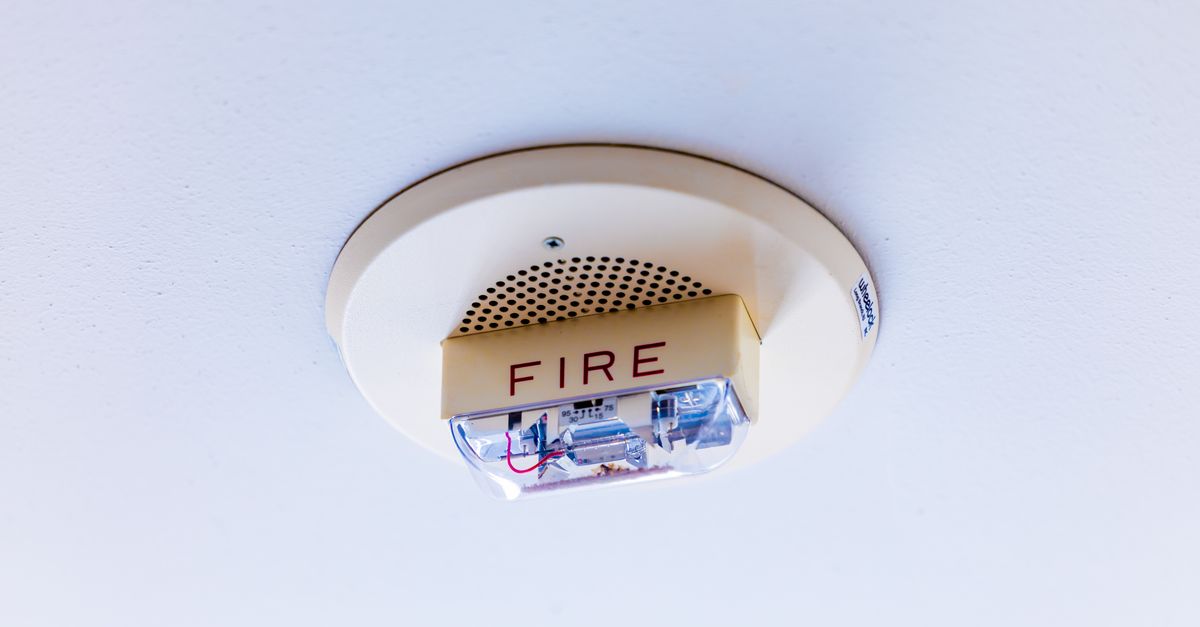
Replace CO detector unit every 7 years. The commonly recommended range is every 5-7 years. CO sensors expire and stop detecting after ~5-7 years. This is a safety-critical task, so do not let it slip.
The electrochemical sensor in a CO alarm has a finite working life, generally shorter than a smoke alarm’s. Manufacturers print an expiry or replace-by date on the unit, and after it the alarm may sound its end-of-life chirp or may simply become less sensitive.
Why does replacing your CO detector unit matter?
CO sensors expire and stop detecting after ~5-7 years.
What happens if you skip replacing your CO detector unit?
An expired CO alarm gives false reassurance. It will still light up and still respond to the test button while its ability to actually detect carbon monoxide has degraded.
How do you do it?
- Find the replace-by date. Printed on the back or the side. If there is no date, the unit predates the requirement and should be replaced now.
- Buy to the current standard. Check the unit carries the relevant national standard mark for your country.
- Consider a ten-year sealed unit. These remove both the battery task and the ambiguity about age, since the unit simply expires as a whole.
- Place it properly. Roughly head height, one to three metres from the appliance, not in a cupboard, not directly above a heat source, and not in a bathroom.
- Write the install date on it. And record the replace-by date somewhere you will actually see it.
What does it take?
How do you know replacing your CO detector unit is overdue?
- A repeating end-of-life chirp that a new battery does not silence
- A replace-by date that has passed
- A unit with no date, which is by definition too old
What do people get wrong?
- Treating the end-of-life chirp as a faulty battery and cycling batteries through a dead alarm
- Buying an uncertified alarm online: check for the national standard mark rather than the price
- Placing it in a kitchen or bathroom, where humidity and cooking fumes shorten sensor life and cause nuisance alarms
What changes how often you need to do it?
- Combination smoke and CO units often expire earlier than a standalone smoke alarm, so track them separately
- Sensor life is shortened by high humidity and by exposure to solvents and aerosols
- Replace after any activation involving a genuine CO event
When should you stop and call someone?
Replacing the alarm is a homeowner job. Working out why one sounded is not: that needs a Gas Safe, licensed or certified technician depending on your country.
Want this scheduled for you instead of remembered?
Get the free appDoes this differ in the US, UK, Australia or Canada?
United States
UL 2034 is the relevant listing. Most units are rated for five to seven years, some ten. Several states require replacement at the manufacturer’s expiry rather than leaving it to judgment.
United Kingdom
Look for BS EN 50291 and a Kitemark. Most UK CO alarms are sealed seven-year or ten-year units, which suits the requirement introduced in England in 2022 for rooms with fixed combustion appliances.
Australia
Alarms should comply with AS/NZS 60291. Because CO alarms are not universally mandated in Australian homes, the practical trigger is owning any open-flued gas appliance, and Energy Safe Victoria’s guidance on gas heater servicing is the most developed in the country.
Canada
Look for CSA 6.19 certification. Ontario and several other provinces mandate CO alarms and require replacement per the manufacturer’s stated life, typically seven to ten years.
Common questions
Why does replacing your CO detector unit matter?
CO sensors expire and stop detecting after ~5-7 years.
What happens if you skip replacing your CO detector unit?
CO sensors expire and stop detecting after ~5-7 years. Skipping it does not usually fail immediately, which is exactly why it gets forgotten: the consequence arrives months later as a repair bill rather than as an obvious fault.
Does replacing your CO detector unit differ by country?
Lifespan 5-7 yrs (check unit). UK/CA newer mandates mean many due soon.
More Safety guides
Often done at the same time
Browse by area of the home
Stop tracking this by hand
Maintainly keeps this task and 65 others on schedule, tuned to your home's systems, climate and country, and reminds you before each is due.
Add just this one reminder and skip the setup.