 Maintainly
Safety
How often should you test your home radon levels?
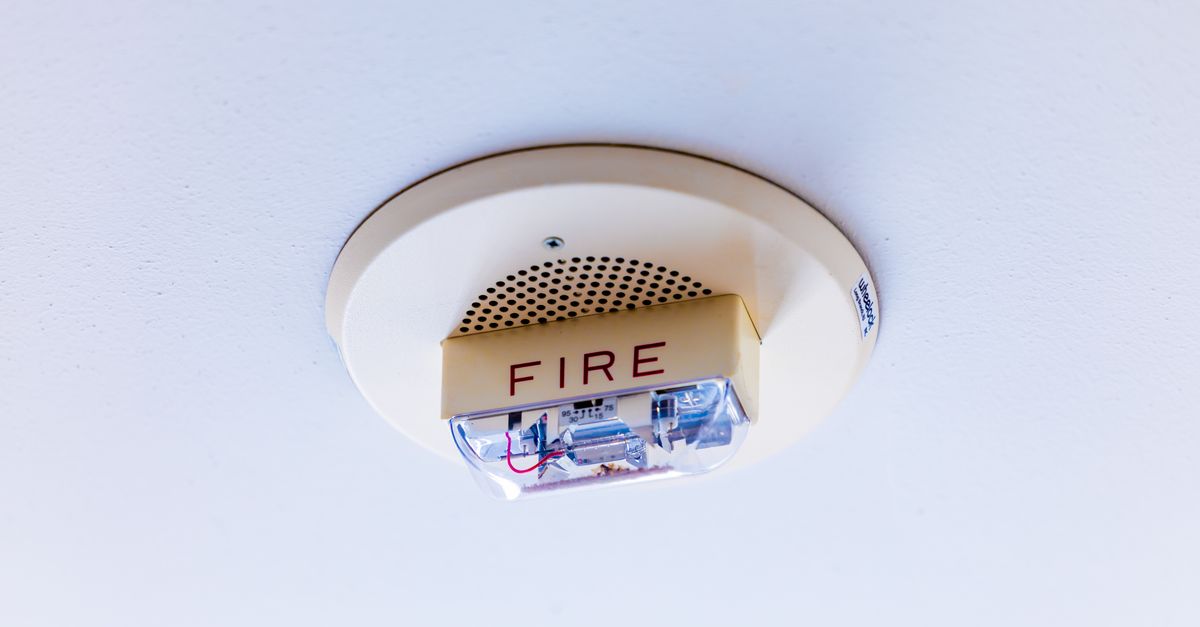
Test home radon levels every 2 years. The commonly recommended range is every 2 years. Radon is a leading cause of lung cancer and is invisible and odorless. This is a safety-critical task, so do not let it slip.
Radon is a naturally occurring radioactive gas released as uranium in soil and rock decays. It enters through foundation cracks, sump pits and service penetrations, and accumulates in the lowest occupied level. It is the second leading cause of lung cancer after smoking in several countries, and there is no way to sense it without a test.
Why does testing your home radon levels matter?
Radon is a leading cause of lung cancer and is invisible and odorless.
What happens if you skip testing your home radon levels?
Elevated radon carries no symptoms at all. The risk is entirely long-term and cumulative, which is what makes it easy to defer indefinitely. Two neighbouring houses can have very different levels, so a neighbour’s result tells you nothing about yours.
How do you do it?
- Choose short-term or long-term. A short-term kit sits for two to seven days and gives a quick indication. A long-term detector runs three months or more and gives a far better picture, because radon varies with season and weather.
- Place it in the lowest lived-in level. A basement you use, or the ground floor if you do not have one. Not a crawl space, not a bathroom or kitchen.
- Position it correctly. At least 50 centimetres off the floor, away from exterior walls, windows, draughts and heat sources.
- Keep conditions normal, or closed for short tests. For short-term tests keep windows and exterior doors closed for 12 hours before and throughout.
- Send it to the lab promptly. Post it the day it finishes. Delay affects the reading on some detector types.
- Act on the result. If it is above your country’s action level, retest to confirm and then get a mitigation quote.
What does it take?
How do you know testing your home radon levels is overdue?
- There are none, which is the entire point. Radon cannot be seen, smelled or tasted
- Higher risk indicators include a basement, a sump pit, a crawl space, or being in a known affected area
- Any renovation that changes the foundation, ventilation or heating warrants a retest
What do people get wrong?
- Testing an unoccupied basement rather than the lowest level you actually use
- Placing the detector on the floor or on a windowsill
- Testing once, getting a low result, and never retesting: levels change with season, ground conditions and building works
- Assuming a new or well-sealed house is safe, when airtight construction can concentrate radon rather than dilute it
What changes how often you need to do it?
- Retest after any major renovation, foundation work, or change to the heating and ventilation
- Winter readings run higher in cold climates because the house is sealed and the stack effect draws soil gas in
- If you have mitigation installed, retest after commissioning and periodically thereafter
When should you stop and call someone?
Mitigation, typically a sub-slab depressurisation system with a fan and a vent stack, is specialist work. Use a certified radon professional rather than a general contractor.
Want this scheduled for you instead of remembered?
Get the free appDoes this differ in the US, UK, Australia or Canada?
United States
The EPA action level is 4 picocuries per litre, and it recommends considering action between 2 and 4. Testing is commonly done at point of sale, and many states have their own radon programmes and free or subsidised kits.
United Kingdom
UKHSA sets the action level at 200 becquerels per cubic metre and publishes a radon map showing affected areas, with parts of the South West, the Midlands and Northern England most affected. Free or low-cost testing is often available for homes in designated affected areas.
Australia
Australian homes generally have low radon levels by international standards, according to ARPANSA’s national survey, and there is no widespread testing programme comparable to North America or the UK. Testing is worth considering for homes with basements or underfloor spaces in known higher-uranium geology, but it is a much lower priority here than elsewhere.
Canada
Health Canada’s guideline is 200 becquerels per cubic metre and recommends a long-term test of at least three months, ideally over winter. Radon levels are high in many parts of the Prairies and Ontario, and Canada has one of the more active national testing programmes, with kits widely available from lung associations and hardware retailers.
What about in Europe?
Germany
Radon precautionary areas are designated by each Land; check yours with the Bundesamt für Strahlenschutz.
Sweden
Measure radon between 1 October and 30 April, over at least two months. A new measurement at least every 10 years is recommended, and after renovations that change ventilation.
Norway
Rented homes must have documented radon measurements, taken between mid-October and mid-April.
Common questions
Why does testing your home radon levels matter?
Radon is a leading cause of lung cancer and is invisible and odorless.
What happens if you skip testing your home radon levels?
Radon is a leading cause of lung cancer and is invisible and odorless. Skipping it does not usually fail immediately, which is exactly why it gets forgotten: the consequence arrives months later as a repair bill rather than as an obvious fault.
Does testing your home radon levels differ by country?
US/CA: radon testing strongly advised (Health Canada, EPA). UK: radon in specific affected areas only. AU: national surveys report low radon levels, so this is a far lower priority than in North America or the UK.
More Safety guides
Browse by area of the home
Stop tracking this by hand
Maintainly keeps this task and 65 others on schedule, tuned to your home's systems, climate and country, and reminds you before each is due.
Add just this one reminder and skip the setup.