 Maintainly
Safety
How often should you replace your CO detector batteries?
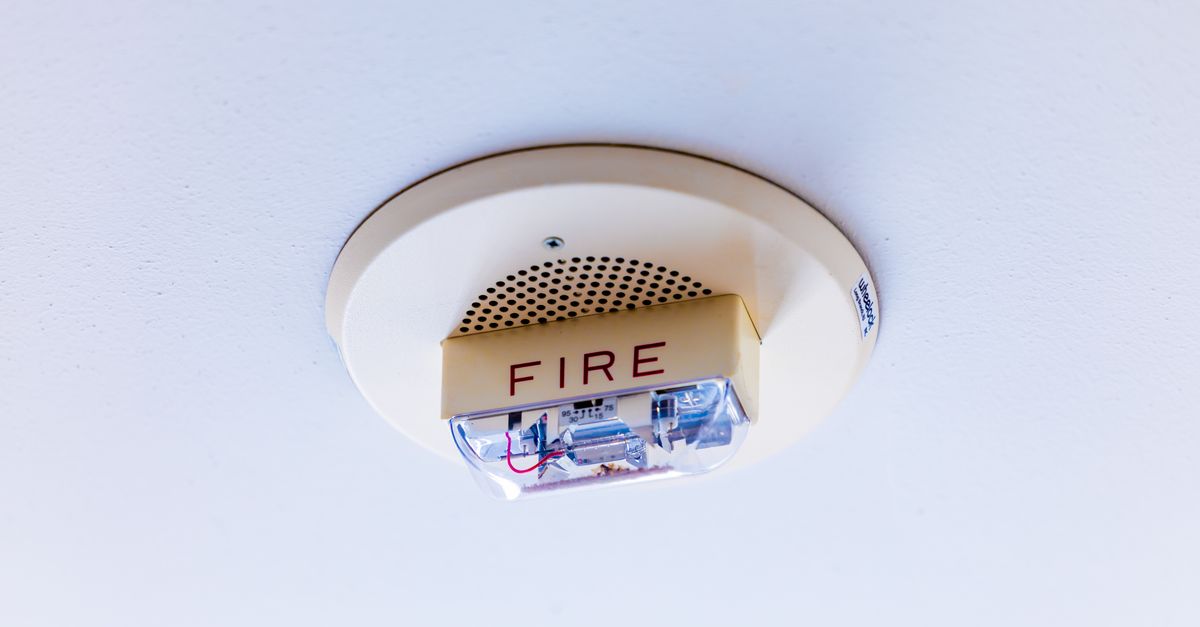
Replace CO detector batteries once a year. The commonly recommended range is every 12 months (test monthly). A non-working CO alarm can't warn you of an odorless, deadly gas. This is a safety-critical task, so do not let it slip. It is seasonal work, best done in autumn / fall.
Carbon monoxide is colourless, odourless and produced by anything that burns fuel: a boiler, a furnace, a gas fire, a wood stove, a blocked flue. There is no way to detect it without an alarm, which is what makes a flat battery in a CO alarm different in character from a flat battery in almost anything else.
Why does replacing your CO detector batteries matter?
A non-working CO alarm can't warn you of an odorless, deadly gas.
What happens if you skip replacing your CO detector batteries?
CO poisoning presents as headache, nausea and confusion, symptoms people routinely mistake for flu, and the confusion stage removes the judgment needed to leave. It is genuinely a case where the alarm is the entire defence.
How do you do it?
- Do it on the same day as the smoke alarms. One annual pass through the house covers both.
- Note the alarm’s expiry date. CO sensors have a shorter life than smoke sensors, commonly seven years. The date is on the back.
- Fit fresh batteries. Use the type specified. Some units take AAs, some a 9V block.
- Test with the button. This confirms the sounder and the electronics, though not the sensor itself.
- Check placement while you are there. Roughly head height in the room, and about one to three metres from the appliance rather than directly above it.
What does it take?
How do you know replacing your CO detector batteries is overdue?
- A single chirp every 30 to 60 seconds, which is low battery
- An end-of-life signal, usually a different chirp pattern, which means replace the unit rather than the battery
- No response to the test button
What do people get wrong?
- Confusing the low battery chirp with the end-of-life chirp and fitting batteries into an expired alarm forever
- Mounting it on the ceiling directly above the boiler, where it responds late
- Treating a single brief alarm as a false alarm: any CO alarm activation means ventilate, leave, and get the appliance checked
- Assuming a smoke alarm also detects CO, which it does not
What changes how often you need to do it?
- Homes with any fuel-burning appliance, an attached garage, or a wood stove need CO alarms regardless of local rules
- Sealed ten-year units eliminate the battery task but still expire
- After any appliance installation or flue work, test again
When should you stop and call someone?
If a CO alarm sounds, get everyone outside into fresh air first, then call the emergency gas line or fire service, and do not re-enter until told it is safe. Then have the appliance and flue inspected before it is used again.
Want this scheduled for you instead of remembered?
Get the free appDoes this differ in the US, UK, Australia or Canada?
United States
Most states require CO alarms in homes with fuel-burning appliances or attached garages, with details set locally. Placement guidance generally follows NFPA 720 principles, on every level and near sleeping areas.
United Kingdom
Since October 2022 in England, a carbon monoxide alarm is required in any room used as living accommodation that contains a fixed combustion appliance, excluding gas cookers, in both rented and owner-occupied homes when appliances are installed. Scotland and Wales have their own comparable requirements.
Australia
There is no blanket national requirement for CO alarms in homes, but Energy Safe Victoria strongly recommends them alongside regular servicing of open-flued gas heaters, following deaths linked to those appliances. If you have any open-flued gas heater, fitting a CO alarm is sensible regardless of whether law requires it.
Canada
Ontario requires CO alarms adjacent to sleeping areas in all homes with fuel-burning appliances or attached garages, and most other provinces have equivalent rules. Attached garages are a particular Canadian risk because of cold-weather idling.
Common questions
Why does replacing your CO detector batteries matter?
A non-working CO alarm can't warn you of an odorless, deadly gas.
What happens if you skip replacing your CO detector batteries?
A non-working CO alarm can't warn you of an odorless, deadly gas. Skipping it does not usually fail immediately, which is exactly why it gets forgotten: the consequence arrives months later as a repair bill rather than as an obvious fault.
Does replacing your CO detector batteries differ by country?
Universal. UK & many CA provinces mandate CO alarms near fuel appliances. AU: CO alarms are not universally mandated, but Energy Safe Victoria strongly recommends them wherever an open-flued gas heater is installed.
When in the year is replacing your CO detector batteries best done?
This is seasonal work. Plan it for autumn / fall, before the weather it protects against arrives.
More Safety guides
Often done at the same time
Browse by area of the home
Stop tracking this by hand
Maintainly keeps this task and 65 others on schedule, tuned to your home's systems, climate and country, and reminds you before each is due.
Add just this one reminder and skip the setup.