 Maintainly
Safety
How often should you check your fire extinguisher?
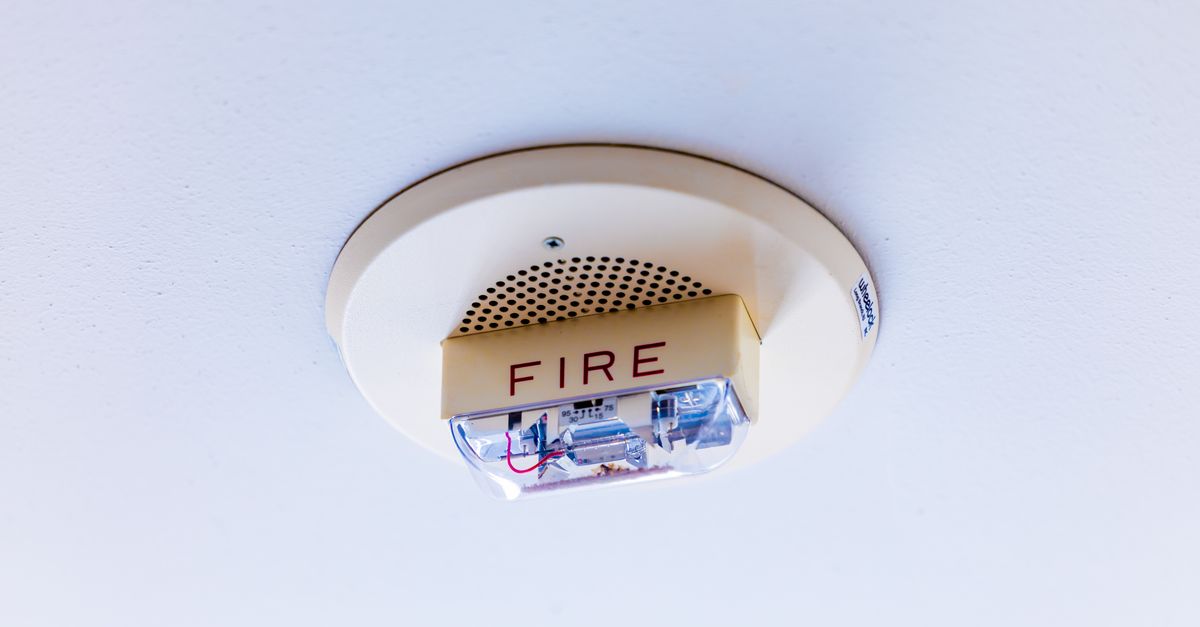
Check fire extinguisher once a month. The commonly recommended range is inspect monthly, service yearly. A discharged or expired extinguisher is useless in an emergency. This is a safety-critical task, so do not let it slip.
The monthly check is thirty seconds of looking, not a service. You are confirming three things: that the extinguisher is where it should be, that the gauge reads in the green, and that nothing has obstructed it since last month.
Why does checking your fire extinguisher matter?
A discharged or expired extinguisher is useless in an emergency.
What happens if you skip checking your fire extinguisher?
Dry powder settles and compacts in a stored extinguisher, pressure leaks away slowly through the valve, and the one time you reach for it you find the needle in the red. An extinguisher is only useful in the first sixty seconds of a fire, so there is no time to discover a problem.
How do you do it?
- Confirm it is in its place and unobstructed. Extinguishers migrate. Check nothing has been stacked in front of it.
- Read the pressure gauge. The needle should sit in the green band. Red on either side means it needs service or replacement.
- Check the pin and tamper seal. The pin should be in place and the seal unbroken. A broken seal means it has been discharged, even briefly.
- Look over the body and hose. Dents, rust, corrosion at the base, or a cracked hose all take it out of service.
- Invert and shake a dry powder unit. Turn it upside down and give it a shake to loosen compacted powder, then return it to the bracket.
- Note the date. Record the check. Most units also have a service or expiry interval printed on the label.
What does it take?
How do you know checking your fire extinguisher is overdue?
- The gauge needle outside the green band
- A broken or missing tamper seal
- Corrosion or dents in the cylinder
- Powder that will not move when the unit is inverted, meaning it has caked solid
What do people get wrong?
- Buying one extinguisher for a whole house: the kitchen and the garage are different risks and the kitchen one should be rated for cooking oil
- Storing it under the sink behind the cleaning products, where you cannot reach it during a fire
- Attempting to fight a fire that is already larger than the extinguisher: get out and call the fire service
- Never checking because it has a gauge, when gauges stick
What changes how often you need to do it?
- Extinguishers in garages and workshops need more frequent inspection because of temperature swings and knocks
- Rechargeable units get a professional service at a stated interval, disposable ones simply expire
- After any use at all, however brief, it must be recharged or replaced
When should you stop and call someone?
Recharging, hydrostatic testing and any unit showing a red gauge go to a fire equipment service company. Do not attempt to repressurise one yourself.
Want this scheduled for you instead of remembered?
Get the free appDoes this differ in the US, UK, Australia or Canada?
United States
NFPA 10 sets monthly visual inspection and annual professional maintenance for commercial premises. Home use is not generally regulated, though the same intervals are sensible. Look for units rated A-B-C for general household use.
United Kingdom
Home extinguishers are not legally required, though a fire blanket in the kitchen is widely recommended and often more practical than an extinguisher for a pan fire. Rented HMOs and communal areas of flats do have requirements, and those units need annual professional servicing under BS 5306.
Australia
Home extinguishers are not mandated, but a 1 kilogram ABE dry powder unit and a fire blanket in the kitchen are the standard recommendation from state fire services. Units should comply with AS/NZS 1841, and AS 1851 covers servicing intervals where they apply. Bushfire-prone properties often keep larger units as part of a survival plan.
Canada
Not generally required in single-family homes but recommended by fire services, with ULC-listed ABC units the norm. Provincial fire codes cover multi-unit residential buildings, where annual professional inspection applies.
Common questions
Why does checking your fire extinguisher matter?
A discharged or expired extinguisher is useless in an emergency.
What happens if you skip checking your fire extinguisher?
A discharged or expired extinguisher is useless in an emergency. Skipping it does not usually fail immediately, which is exactly why it gets forgotten: the consequence arrives months later as a repair bill rather than as an obvious fault.
Does checking your fire extinguisher differ by country?
US: NFPA 10 monthly check. UK: BS 5306 annual service + monthly visual. CA: similar.
More Safety guides
Often done at the same time
Browse by area of the home
Stop tracking this by hand
Maintainly keeps this task and 65 others on schedule, tuned to your home's systems, climate and country, and reminds you before each is due.
Add just this one reminder and skip the setup.