 Maintainly
Plumbing
How often should you test your main water shutoff valve?
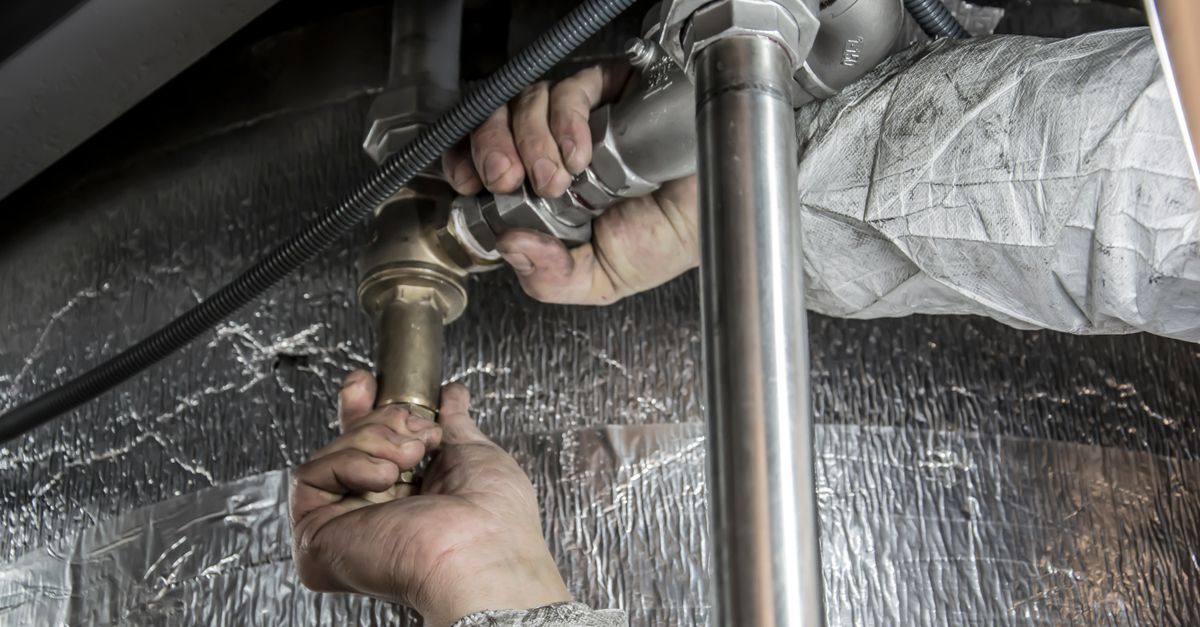
Test main water shutoff valve once a year. The commonly recommended range is annually. A seized shutoff means you can't stop a burst pipe fast, major flood risk.
The main shutoff is the single valve that stops all water entering the property. Everyone should know where it is and it should be tested annually, because a valve that has not moved in fifteen years frequently will not move at all when you need it in a hurry.
Why does testing your main water shutoff valve matter?
A seized shutoff means you can't stop a burst pipe fast, major flood risk.
What happens if you skip testing your main water shutoff valve?
A burst pipe discharges a very large volume of water quickly. The difference between finding the valve in thirty seconds and hunting for it for ten minutes is the difference between a mopped floor and replaced flooring, ceilings and possessions. A seized valve removes the option entirely.
How do you do it?
- Find it and make sure the household knows. Commonly under the kitchen sink, in a basement or utility room, in a garage, or in a covered box at the boundary. Label it clearly.
- Turn it fully off. Clockwise for a gate or globe valve, or a quarter turn to cross the pipe for a ball valve.
- Confirm the water is actually off. Open the lowest cold tap in the house. It should run briefly and stop.
- Turn it back on slowly. Opening quickly causes water hammer that can damage fittings. Take several seconds.
- Back a gate valve off a quarter turn. Fully open then a quarter turn back prevents the stem seizing in the fully open position.
- Check for weeping afterwards. Old valves sometimes weep from the gland once disturbed. Tightening the gland nut slightly usually fixes it.
- Locate the external stop valve too. There is usually a second valve at the property boundary, which is your backup if the internal one fails.
What does it take?
How do you know testing your main water shutoff valve is overdue?
- A handle that will not turn, or that turns without resisting, which means the stem has sheared
- Water continuing to run at a tap after the valve is fully closed
- Visible corrosion or green staining around the valve body
- Nobody in the household knowing where it is
What do people get wrong?
- Forcing a seized valve with a wrench, which snaps the stem and turns a stiff valve into an emergency
- Leaving a gate valve fully open against its stop for years, which is exactly how it seizes
- Never telling anyone else in the house where it is
- Not knowing where the external boundary valve is as a backup
What changes how often you need to do it?
- Older gate valves seize far more readily than modern quarter-turn ball valves and are worth replacing proactively
- Hard water areas scale valve seats faster
- Test before leaving the property empty for any extended period
When should you stop and call someone?
If the valve will not close, weeps continuously after testing, or has a sheared stem, get a plumber to replace it. Replacing a main shutoff usually requires the supply to be isolated at the boundary or by the water utility.
Want this scheduled for you instead of remembered?
Get the free appDoes this differ in the US, UK, Australia or Canada?
United States
Usually where the supply line enters the house, often in a basement, crawl space or garage, with a separate curb stop at the street that requires a special key and is often the utility’s property. Many jurisdictions require a pressure reducing valve as well, which has its own lifespan.
United Kingdom
The internal valve is called the stopcock and is most often under the kitchen sink. There is also an external stop tap in the pavement or the front garden under a small metal cover, which usually needs a stopcock key. Water suppliers can be contacted if the external one is inaccessible or seized.
Australia
The main tap is usually at the water meter near the front boundary, and many homes have no readily accessible internal isolation valve at all, which makes knowing the meter location important. Meters are typically in a green or black box near the property line. Water restrictions in some states mean the meter is also where usage is monitored, so it is worth knowing regardless.
Canada
The main shutoff is usually in the basement close to where the line enters below the frost depth, with a curb stop at the street. Where any part of the supply runs through unheated space, knowing the shutoff matters even more, because frozen pipe bursts are a leading winter insurance claim.
Common questions
Why does testing your main water shutoff valve matter?
A seized shutoff means you can't stop a burst pipe fast, major flood risk.
What happens if you skip testing your main water shutoff valve?
A seized shutoff means you can't stop a burst pipe fast, major flood risk. Skipping it does not usually fail immediately, which is exactly why it gets forgotten: the consequence arrives months later as a repair bill rather than as an obvious fault.
Does testing your main water shutoff valve differ by country?
Universal. UK 'stopcock'; US/CA 'main shutoff valve'.
More Plumbing guides
Browse by area of the home
Stop tracking this by hand
Maintainly keeps this task and 65 others on schedule, tuned to your home's systems, climate and country, and reminds you before each is due.
Add just this one reminder and skip the setup.